|
 |
 |
|
|
| |
Trade
Tricks: Using Graduated Filters
There’s No Digital Substitute For Some
Traditional Photographic Tools
Text And Photography By Wes Pitts |
|
| |
|
|
| |
|
|
| |
For all of their surface differences,
digital photography and traditional film photography have a
lot in common. Case in point: good, old-fashioned lens filters.
Despite the high-tech wizardry of
which the digital darkroom is capable, it can’t accurately
re-create what the camera didn’t record. There’s
no digital substitute for controlling the light before it enters
the camera—only a lens filter can do that. |
|
| |
|
|
| |
| |
|
|
|
|
|
| |
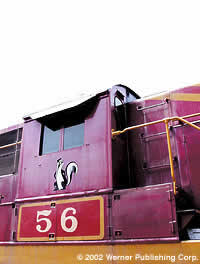
Without
Filter |
|
|
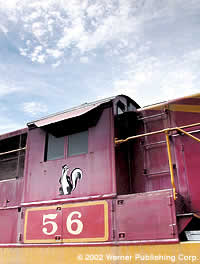
With
Filter |
|
|
|
|
|
|
|
|
|
| |
A prime example of what lens
filters can do for your photographs, whether they be digital
or film, is the graduated neutral-density
filter. You’ll want to have this filter on hand
when you’re dealing with extreme contrast in a scene.
Unlike the human eye, which can record
and process a wide tonal range, photographic tools can capture
only a very limited range of tones. So, if you’re
trying to photograph a subject in the shade with a bright sky
behind it, you’re going to end up with either a washed-out
sky or a dark subject—that is, unless you use a graduated
neutral-density filter to darken the sky.
I took these photographs of a train at Travel Town, a public
park in Los Angeles dedicated to preserving artifacts from the
golden age of railroads. It was a bright, sunny Southern California
day. First, I composed a shot without a filter. While the train
is properly exposed, the sky is blown-out. Then I took the same
shot holding a graduated filter in front of my camera’s
lens. I was careful to align the density transition of the filter
with the boundary line where the train ends and the sky begins.
The dense half of the filter blocked
some of the light from the sky, reducing the contrast of the
scene and bringing the sky and the train into a tonal range
that my camera could handle. You can see the difference
it made. |
|
| |
|
|
| |
If your digital camera has a threaded
mount or adapter that allows you to attach filters, you
can get a rotating neutral-density filter that screws
in on top of your lens. The advantage of this approach
is that it’s convenient, but because the filter is
fixed in position, you won’t have as much compositional
flexibility, since the filter must be aligned precisely
with the transition between light and dark in the scene.
For this example, I used a rectangular
Singh-Ray “Daryl Benson” ND-3 Reverse Graduated
filter that I hand-held in front of the lens. This
approach allowed me to position the density transition
anywhere I wanted to in the frame, giving me compositional
freedom. If you choose this route, be sure you hold your
filter totally flat against your lens or you may get stray
reflections off of the filter’s surface.
While digital cameras and software give us new levels
of control over our images, digital photography is still
photography, and many “old school” tools are
just as important as ever. Learn to use lens filters for
your digital photography and you’ll get better results,
guaranteed. |
|
|
Resources
B+W Filters (Schneider)
(631) 761-5000
www.schneideroptics.com
Cokin Filters (Minolta)
(201) 825-4000
www.minoltausa.com
Heliopan (HP Marketing)
(800) 735-4373
www.hpmarketingcorp.com
Hoya Filters (THK)
(800) 421-1141
www.thkphoto.com
Lee Filters
(800) 576-5055
www.leefilters.com
Singh-Ray Filters
(800) 486-5501
www.singh-ray.com
Sunpak (ToCAD)
(973) 428-9800
www.tocad.com
Tiffen
(800) 645-2522
www.tiffen.com |
|
|
|
|
|
|
|
|
|
|
|
|

Home | Articles
& Reviews | Current
Issue | Past Issues
Staff & Contributors | Photo
Books | HelpLine
| Glossary
Advertiser
Info | Links | Shopper
| Subscriptions | eStore
Account Inquiry | Submissions
| Contact Us | About
Us
| Privacy Statement
|
|
Click here for

























|