|
 |
 |
|
|
| |
Trade
Tricks: Reflectors For Digital Work
Simple-To-Use Reflectors And Diffusers Can
Help You Make The Most Of Any Lighting Situation
Text And Photography By Ibarionex R. Perello |
|
| |
|
|
| |
|
|
| |
To create a great portrait with
my digital camera, I need to control light. To make a portrait
that my subject and I are going to be excited about, I must
work with light like a sculptor works with clay—I’m
going to have to shape it and control it. Reflectors and diffusers
are the tools to do just that.
While photographing a friend’s twins in the comfort of
their backyard, I had to contend with harsh afternoon light.
Normally, I’d pull them into the shade, but the resulting
shots are often flat. Instead, I found it a perfect opportunity
to use reflectors and diffusers to create dynamic lighting that
elevated the photographs from mere snapshots to nice portraits. |
|
| |
|
|
| |
 |
|
| |
|
|
| |
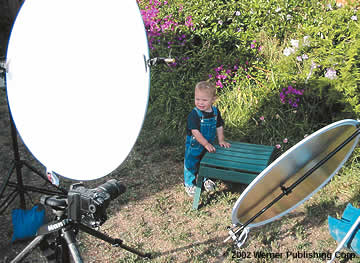
Using a Photoflex Multi-Disc
5’n1™ reflector, which includes a diffuser,
I created soft and even illumination. I positioned
a second LiteDisc to the boy’s lower left to
fill in shadows and brighten up the scene. Both are
held in place with light stands and LiteDisc holders.
|
|
| |
|
|
|
|
|
Diffusers
and reflectors provide an easy and affordable means for
controlling light. Rather than accepting or avoiding a
bad lighting situation, these tools let me use it to my
advantage.
First, I set up a diffuser between my light source (the
sun) and my subjects (two inexhaustible twins). Made of
a translucent material, the diffuser softened the late-afternoon
light and created even illumination over the children.
The diffuser reduced the sharp contrast of the original
scene and eliminated the problem of the children squinting
into the sun.
Next, I positioned a white reflector to the left of my
subjects. When properly positioned, reflectors catch light
and redirect it. In this case, I used the light to brighten
up the scene and eliminate shadows beneath the twins’
brows, noses and chins. It also succeeded in bringing
out the color of the children’s eyes.
If I had wanted to warm up the scene, I could have used
the gold reflective surface of the reflector. This would
have produced a warm tone often found in fashion spreads
in women’s magazines. I only do this under overcast
days or when sunlight has been softened by a diffuser,
as the gold reflector can sometimes reflect harsh light
into the subject’s eyes that will make them squint.
Usually, I’ll have a friend hold the reflectors in
place while I’m photographing. They can easily confirm
that they’re holding it correctly because they’ll
see the light from the reflector hitting the subject.
If someone isn’t available, I’ll use light stands
and a boom arm. After positioning the diffusers and reflectors,
I’m free to direct all my attention on my subject.
If working under windy conditions, I’ll use small
sandbags to hold the light stands in place (a heavy camera
bag will do in a pinch).
Although I could achieve similar effects with a white
matte board, today’s reflectors and diffusers are
collapsible and extremely portable. I can set up and strike
down in less than 10 minutes. The less time I spend setting
up, the more time I have with my subject so I can help
them become comfortable. The informal quality of the setup
also helps to relax them and allows me to capture more
natural expressions.
|
|
|
 |
|
| |
|
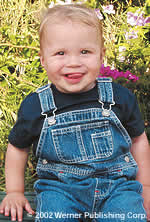
The final image shows
how the diffuser and reflector deliver bright and even
illumination perfectly suited for portraiture. |
|
| |
|
|
|
| |
|
|
|
| |
|
 |
|
| |
|
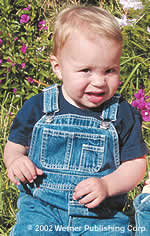
Harsh sunlight produces
a high-contrast scene with glaring lights, causing the
subject to squint and resulting in a less than satisfactory
image. |
|
| |
|
|
|
| |
|
|
|
| |
|
|
|
|
|
|
|
|
|
|
|
|
|
|
|

Home | Articles
& Reviews | Current
Issue | Past Issues
Staff & Contributors | Photo
Books | HelpLine
| Glossary
Advertiser
Info | Links | Shopper
| Subscriptions | eStore
Account Inquiry | Submissions
| Contact Us | About
Us
| Privacy Statement
|
|
Click here for

























|